
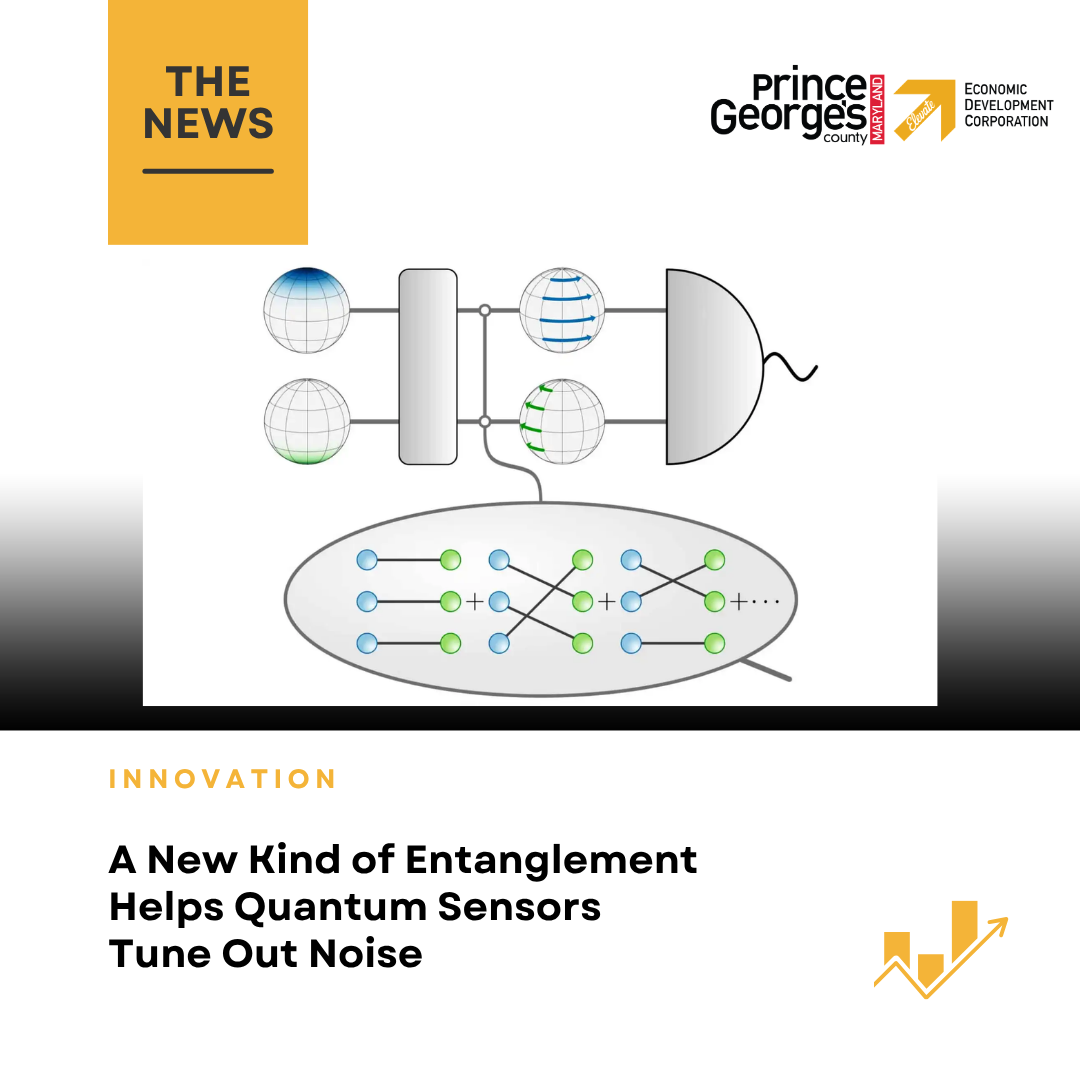
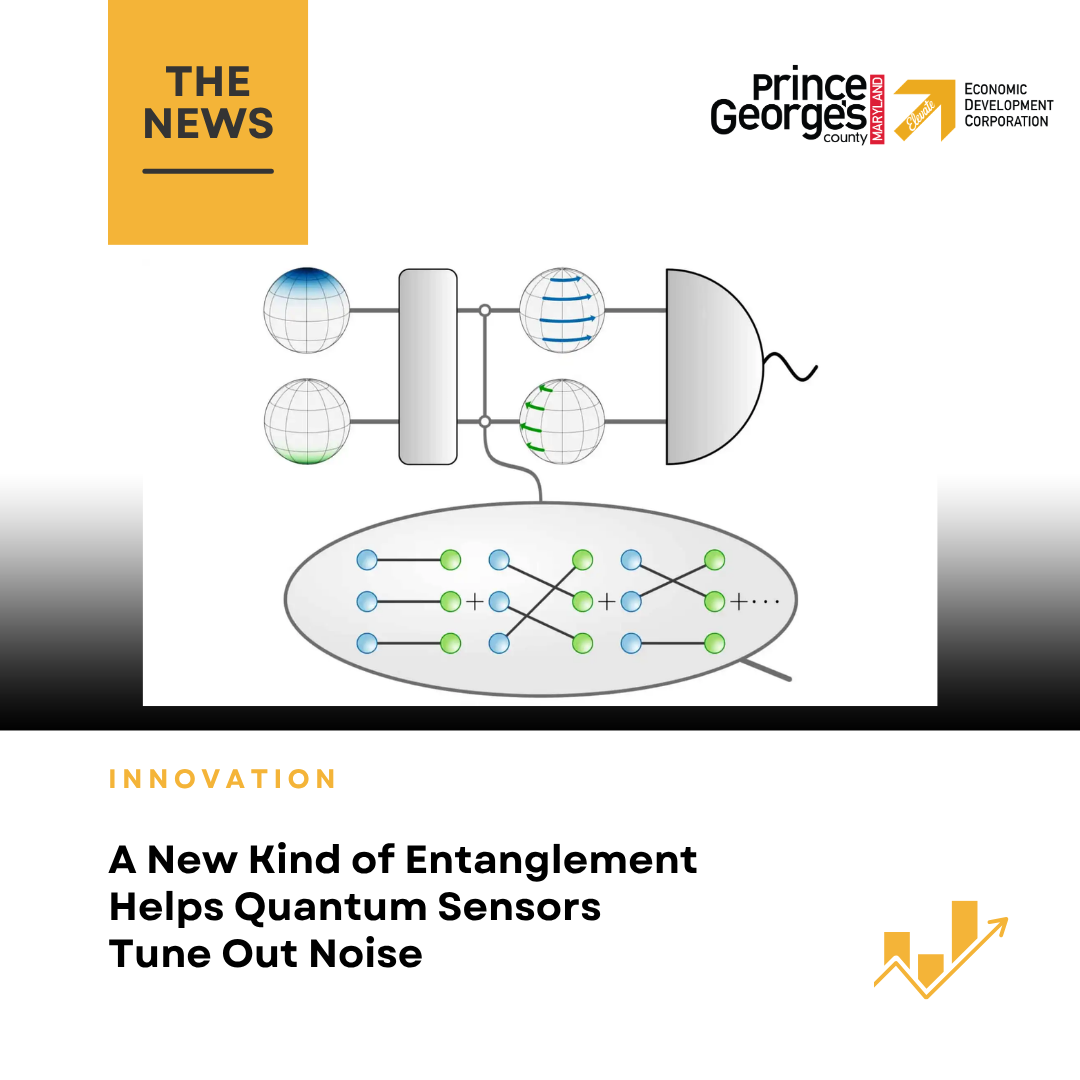
Photon exchange through an optical cavity links two atomic ensembles, creating a shared entangled state. This entanglement is designed to be insensitive to common noise while remaining highly sensitive to differential signals. (Credit: Raphael Kaubruegger, JILA)
In a quest to build the most accurate sensors in the world, scientists are constantly improving their performance. Making them more precise, stable and reliable.
But eventually, physical constraints will prevent further improvements.
“By fully embracing the laws of quantum physics, one can expand the performance limits imposed by these constraints,” says JQI Fellow Alexey Gorshkov, who is also a Physicist at the National Institute of Standards and Technology (NIST), a Fellow of the Joint Center for Quantum Information and Computer Science and an Associate Professor in the Department of Physics at the University of Maryland. “And it's very exciting to come up with protocols that come as close as possible to saturating these limits for different sensing tasks.”
Even the most precise sensors in the world are not fully isolated and are limited by noise—subtle disturbances from the environment like vibrations, electromagnetic fields or temperature changes.
So, Gorshkov, JILA Fellows Ana Maria Rey and James K. Thompson and their colleagues from the Niels Bohr Institute and the Indian Institute of Technology Madras, asked, how can we improve the next generation of sensors despite these limitations?
READ MORE BELOW
Original Article: https://umdphysics.umd.edu/about-us/news/research-news/2108-new-entang.html